
julie elie spent about fifteen years recording zebra finches, which is the sort of patience that does not survive a grant cycle. the recordings piled up faster than anyone could sit and label them, so a machine sorted the pile by what it could measure: how long each call ran, how bright it was, how much of it was clean tone and how much was noise.
it came back with eleven kinds. nobody had told it what a finch wants. it had only the sound.
then she did the part that makes it science rather than filing. she played the calls back to the birds and watched what they did. the birds sorted them the same way the machine had, by what the calls were for, and not by what they sounded like. two calls a person would never group together got the same answer.
that is the finding, and it is smaller and better than the headline anyone will write about it. it is not a translation and it is not a conversation. it is evidence that the categories are real, and that they can be found from the outside by someone patient enough to record for fifteen years.
the bench above does the same two jobs. every call is built from its own acoustic parameters and then measured back out of the signal, and a sorter groups the pile without ever being shown a name. the line it draws is between the call you played and the recording in its own group that sounds least like it.
elie has been careful about what this is, in a field where being careless would get more attention. she is not talking to birds. she found out that when a finch calls, there is a thing it is calling about, and that a machine listening to the shape of the sound can find the same thing a bird does.
the board below is one dinner rush. pies come out of the oven and start going cold on the rack. you load the van, then you send it. behind the board a simulation of the whole night runs under whatever loading rule your own runs demonstrate, with the drivers, the road, and the saving that batching really does buy.
a driver standing in a pizza hut kitchen used to leave when his pizza was ready. then the company put in a delivery management system, and the screen began showing him what else was about to come out of the oven.
so he waited. one more pie on the run meant one less run, and one less run was the number the system was counting. the franchisee's suit says orders that had been arriving inside half an hour nine times in ten started arriving late about half the time.
the board above is not a picture of that. it is a queue, with a crew, road time and the genuine saving that consolidation buys, and it will do the same thing to you. hold the van for a fuller load and the run count drops hard. hold it a little longer and the promise the whole business is sold on quietly stops being true.
nobody in this story did anything irrational. the drivers optimised the number they were handed. the system reported that number improving, because it was. the only thing that broke was the assumption that the number and the food were the same object.
pizza hut has not answered publicly. every operational figure here is the franchisee's account, filed in a texas business court in may, and the sums it is asking for are in the panel above rather than in this sentence.
the driver is still the one holding the box. he can see the kitchen now and the kitchen can see him, and the one thing neither screen has ever shown is the person at the other end of the road opening it and finding it cold.
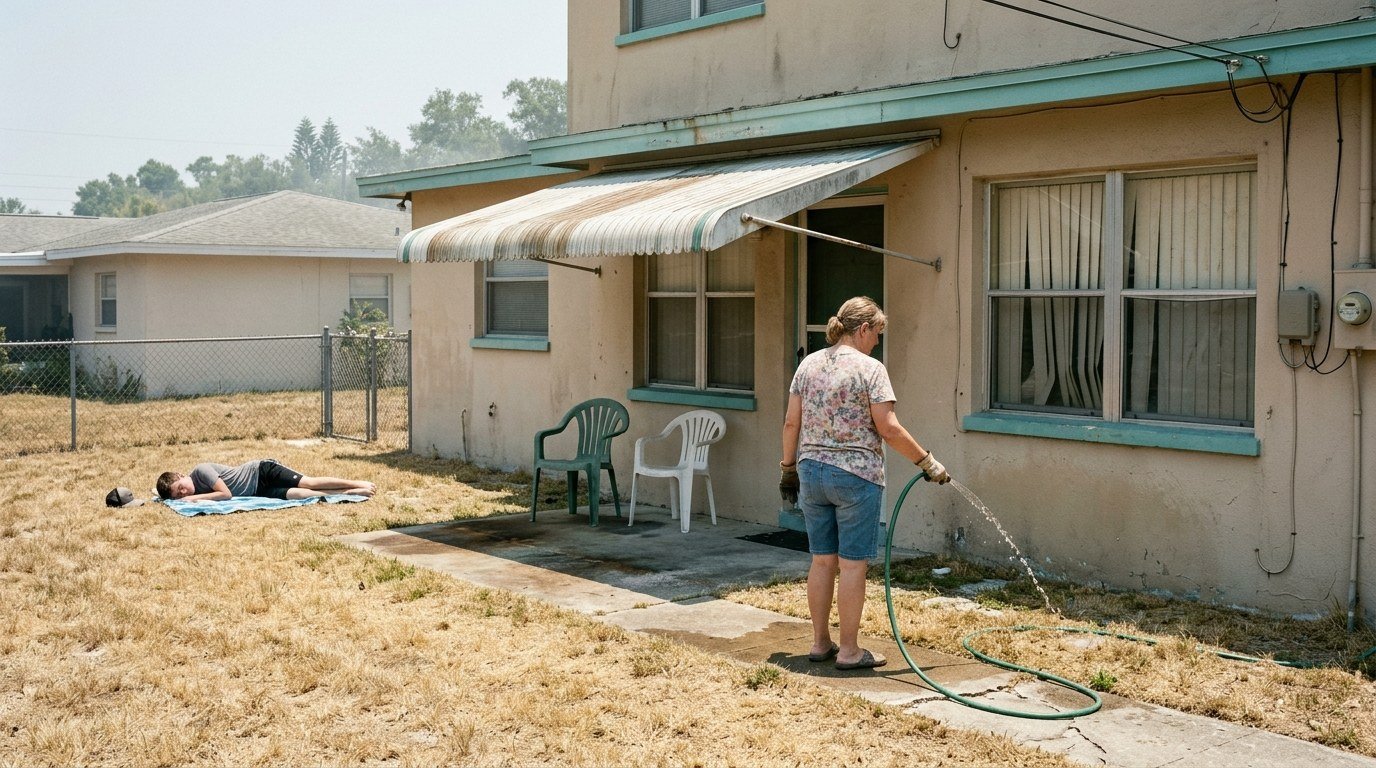
she has lived at the end of the county road a long time, and the field across from it has been sold. what goes up there will have no windows, no shift change and no reason to talk to her. below is a model county. site the campus on it, set its load, and watch where the bill for the wire lands.
site the campus to run the model.
a data centre campus is a customer with the appetite of a small city and none of a small city's obligations. it does not hire many people, it does not send children to the school, and it does not need the town to like it. what it needs is power, and power at that size does not arrive on the wire that is already there.
somebody has to build the new wire. in most states the cost of that build goes into a pot every customer on the system pays into, split by a rule about who contributes to peak demand. utilities are seeking to pass a share of it to residential customers, and residential customers are the only class in the room without a lawyer.
towns have started to say wait. seattle's council passed an emergency moratorium on new and expanding data centres, the biggest american city to pause approvals, and spokane passed its own a fortnight later by a lopsided vote, closing a loophole in seattle's. neither is a ban. both are pauses with an end date, bought to give a planning department time to write rules that do not exist yet.
near ypsilanti the refusal came from the water side instead. the utility voted not to promise water and sewer service to data centres and ai computing facilities for a year, with two proposed campuses already in front of it. it did not cut anyone off. it declined to commit to the next one.
the monthly figure this page derives is projected from a stated rule and the model's own assumptions, not a rate anyone has been charged.
the pattern underneath all three is the same. the load shows up first, the cost of carrying it shows up second, and the person who never gets asked is the person who gets the bill. legislatures noticed: bills creating a separate rate class for very large customers are moving in states that agree on almost nothing else, which is what the toggle on the instrument is.
she will not be consulted about the campus, and she will not be consulted about the wire either. she will find out the way everyone finds out, on a line item, in a month with no explanation attached to it. nobody voted to put it next to her, and the bill for reaching it arrives at her house anyway.
the instruction below is built from all five factors. under it, a policy trained on this page, by gradient descent, on demonstrations whose balance you control. it is never told to prefer the colour. change what the demonstrations vary and it changes its mind, because that is where its mind came from.
a team at northeastern and nvidia built instructions out of five parts, the colour, the object, where it is, how big it is, and what to do with it, and then put six robot foundation policies through them. these are the systems behind the humanoid money, the ones expected to take an instruction and act on it.
the colour won. told to rotate the red block, the policies went to the red one and did whatever they had mostly been shown doing, which was picking things up. the verb and the size, the two parts that say what to actually do and which one you mean, were the parts they had learned least.
the bench above will do the same thing to you, for the same reason. the policy on this page is four numbers and a softmax, trained here on demonstrations you control. leave the data as it comes and the colour dominates. it is not being stubborn. in the demonstrations it was given, the colour was almost always the thing that told the target apart from everything else on the table, and nothing in them ever depended on the verb.
a model cannot learn from a column that never changes. it learned exactly what was in front of it.
the useful half of the paper is the part that follows. having measured which factors were under grounded, the team reallocated the data collection to cover them, and then beat their own baselines in simulation and on a real robot while using half the demonstrations. the fix was not a bigger model or a longer run. it was collecting different examples.
tremblay, wong and their co authors are describing something less like a bug and more like an accounting error, and it is one anyone who has ever built a dataset will recognise. the machine will always tell you what your data was actually about. the trouble is that it will tell you by doing something, and by then a robot arm is already moving.
the plate below is a cohort of a thousand denied cases, drawn one case at a time from the two rates the lawsuit puts on the record. appeal one of them yourself. it will win, and the plate will barely move. then raise the share of people who ever file, and watch the only thing that turns the field over.
at the rates the lawsuit puts on the record, two cases in a thousand ever file, almost every one of those two comes back reversed, and the plate ends where it started. the outcome of the cohort was decided by the people who never filed, not by who was right.
gene lokken was 91 when he fell at his wisconsin nursing home and fractured his leg and ankle. that june his orthopedic doctor ordered intensive physical therapy. weeks later unitedhealthcare stopped paying for the skilled nursing care he was still in, and the family says he was nowhere near ready to leave it.
the lawsuit alleges the call was driven by nh predict, navihealth software that estimates how long a patient like this one should need. the family appealed. the family lost. then they paid the nursing home themselves, month after month, for close to a year, until he died the following july.
unitedhealth publicly disputes that ai makes final coverage decisions, and says its medical directors do.
the case is still live. a federal judge in minnesota threw out most of the counts and let the breach of contract claims through, and a magistrate has since ordered the company to produce documents it fought to keep. a class certification fight is next.
that is what the plate above is doing. the lawsuit says, citing federal appeal data, that denials like this one came back reversed at an overwhelming rate, and that only about two policyholders in a thousand ever filed an appeal at all. a rate that high, over a group that small, moves almost nothing. what decided the cohort was the people who never filed.
a denial does not have to be right to hold. it only has to land somewhere nobody appeals. gene lokken's family did appeal, and lost, and paid for the last year of his life themselves.
a person with scarred lungs swallows a capsule once a day in a clinic in china, and nobody involved can point to the chemist who drew it. the molecule came out of software, and so did the target it was drawn to hit. it is in trials, not on a shelf. below is the arithmetic that turns a chemical space into something worth making. bond fragments together and read what the window says.
idiopathic pulmonary fibrosis scars the lung until it will not stretch. it is progressive, it is mostly fatal, and the drugs licensed for it slow the decline rather than stopping it. that is the ground rentosertib is being tested on.
the new part is not the molecule on its own. insilico's pandaomics went looking through the disease biology for something worth aiming at and came back with tnik, which nobody had connected to fibrosis. chemistry42 then generated and optimised the compound to hit it. target and molecule both came out of the machine.
in the phase iia readout, patients on the highest daily dose gained lung capacity while the placebo arm lost it. the common drug related events were diarrhoea and abnormal liver function, and both cleared once patients came off the drug.
the trial was small, and one small trial is where a drug goes to be doubted rather than believed. what changed this july is that insilico started the phase iii, the stage where a compound is either confirmed or found out.
what the bench above is doing is the unglamorous half of this. a search does not think in molecules, it thinks in parts and windows. mass, greasiness, how many bonds are free to twist, how many places the thing can donate or accept a hydrogen. every one of those is arithmetic on a graph, and a candidate either sits inside the stated window or it is thrown out with the property that failed it written on the label.
the machine's contribution was to make that search cheap enough to run properly, over a space no chemist could walk. everything after it is unchanged: a flask, a factory, a trial, a form. software chose the target, software drew the drug, and it is already inside a person who is waiting to find out whether it works.
pat palmer has spent a career reading other people's hospital bills, and she finds mistakes on most of the ones that reach her. below is an itemised bill, composed for this page but built the ordinary way. walk down it. a checker is reading the same column you are.
an itemised hospital bill is not written to be read. it is written to be paid. the codes are compressed, the descriptions are internal shorthand, and the arithmetic sits in a column that nobody on the hospital side is paid to check again once it leaves the building.
medical billing advocates of america, where pat palmer works, reports errors on roughly three of four of the bills its advocates are asked to review. that number describes the bills that reach an advocate, which are larger and more often already disputed than the ones that do not. the industry's own broader claim runs up to eighty percent, and it is an estimate rather than a count.
the checker above is not a metaphor for a checker. it holds five rules about what a bill may not contain, and it applies them to a ledger it did not write and was never shown the answers to. it looks for the same code charged twice on one day, a test billed again inside the panel that already covers it, more units than a code allows, more nights than the stay lasted, and a service dated after the patient went home.
not one of those needs a lawyer or a coding certificate. they need somebody to read down the column with a pen. that is the labour nobody in the system is assigned, and the person holding the bill is the only one in the arrangement with a reason to do it.
one piece of care with the numbers, because they belong to a different question. the figures people repeat about appeals, that most of the ones filed get overturned and that almost nobody files, come from insurance denials rather than billing errors. that is a different fight with a different opponent and a different form. it is worth knowing on its own, and it is not evidence about the column in front of you.
pat palmer's advice has not changed. ask for the itemised bill rather than the summary, then read down it the way the checker on this page just did, and ask about anything you cannot account for. the hospital will not do that for you. it is your money sitting in that column, and the column is the only place it is visible.
seven signals from one week. every instrument in this issue runs the thing its story is about, and where a number appears under your hand it was computed under your hand.
the delivery board is a queue with drivers and road time, and the pizza goes cold because you batched it. the bill checker is five rules applied to a ledger it was never shown the answers to. the policy in the robot story is trained on this page, on data you control, and it prefers the colour because the demonstrations did.
none of them are animations of a result. where a figure is somebody’s claim rather than a settled fact, the page says whose claim it is. the composed material, the bill and the delivery night, is labelled as composed.
each signal can be read with the sound off, with motion turned down, with a keyboard, or on paper, and it makes its whole point in every one of those. if it does not, that is a defect and not a compromise.
one issue every saturday. seven signals the press missed. written for people who would rather know than be entertained.